First Day of Fall: Where to Travel After the Autumnal Equinox
The first day of fall in 2026 falls on September 22 in the United States, marked by the autumnal equinox. It is the moment when day and night come close to equal length, and the Northern Hemisphere begins its slow turn toward cooler mornings, softer light, and changing landscapes.
For travelers, the autumnal equinox is more than an astronomical event. It is a reminder that a new travel season has begun — one shaped by golden forests, harvest towns, mountain air, and quieter roads. Summer's crowds start to thin, prices often ease, and the light itself becomes more forgiving for photography and slow, unhurried exploration.
This guide looks at when fall officially begins, why it's one of the best seasons to travel, and where to go — from classic foliage routes to lesser-known landscapes on the other side of the world.
When Is the First Day of Fall in 2026?
In 2026, the autumnal equinox falls on September 22, at 8:05 p.m. EDT. Depending on your time zone, that translates to 7:05 p.m. CDT, 6:05 p.m. MDT, or 5:05 p.m. PDT. Because of time zone differences, the equinox technically arrives on September 23 in Coordinated Universal Time (UTC) and in most of Asia and Europe.
While the calendar marks an exact moment for the equinox, the season itself doesn't arrive everywhere on the same day. In some places, fall begins with the first red leaves on a maple tree. In others, it begins with harvest markets, morning mist over a valley, or the first dusting of snow on a distant mountain range. The equinox is simply the astronomical starting gun — the season plays out differently depending on where you are.
Why the Autumnal Equinox Is a Perfect Time to Plan a Trip
There's a reason so many seasoned travelers consider fall the best season to go somewhere new. A few reasons stand out:
● Fewer crowds. Summer vacationers have gone home, and the shoulder season between summer and winter holidays tends to be quieter at major destinations.
● Softer light. The lower angle of the autumn sun creates longer golden hours, which is part of why fall photography looks so different from summer snapshots.
● More comfortable temperatures. Cooler air makes hiking, cycling, and long days of walking around a city far more enjoyable than the heat of July or August.
● Harvest season. Vineyards, orchards, and farmers' markets hit their peak, which means better food, local wine, and seasonal menus almost everywhere you go.
● A wider color palette. Fall isn't only about red and orange leaves. It can also mean golden grasslands, amber deserts, and forests that turn a luminous yellow rather than crimson.
That last point matters more than people think. Once you stop associating "fall travel" only with New England-style foliage, a much wider set of destinations opens up.
8 Best Autumn Travel Ideas for the First Day of Fall
1. See Classic Fall Foliage
If you want the postcard version of autumn, New England, Japan, and the Canadian Rockies remain hard to beat. Vermont's back roads, Kyoto's maple gardens, and Banff's mountain lakes all deliver the reds and oranges that define the season in the popular imagination. Peak color usually moves from north to south and from higher to lower elevations, so timing your trip a week or two apart from a friend heading somewhere else can make a real difference.
2. Follow the Harvest Season
Autumn is harvest season across much of the world, which makes it an excellent time to travel for food and wine. Tuscany and Provence come alive with grape harvests, Napa Valley's crush season draws visitors from around the world, and countryside markets everywhere fill up with squash, apples, mushrooms, and root vegetables. A trip built around a region's harvest calendar often ends up being as much about the table as the scenery.
3. Travel Through Mountain Landscapes
Mountain ranges take on a different character once summer ends. The Alps, the Rockies, and the Scottish Highlands all shed their summer crowds while keeping trails open and weather generally mild. Higher-altitude regions like Qinghai, on the eastern edge of the Tibetan Plateau, offer a quieter alternative — cooler air, big open skies, and a sense of scale that's hard to find at lower elevations.
4. Find a Golden Forest Instead of a Red One
If you want something beyond the classic red-and-orange foliage routes, consider Xinjiang in western China. From late September into October, desert poplar forests turn a vivid, almost luminous gold along oasis corridors and river valleys. These ancient, drought-resistant trees create a landscape that looks closer to a painting than a typical forest walk — golden branches set against sand dunes, distant snow peaks, and deep blue sky. Exact peak color depends on location and that year's weather, but late September through mid-October is generally considered the best window. For a curated way to experience this, the Silk Road Express runs its autumn departure through the heart of Xinjiang's golden poplar forests in October.
5. Take a Scenic Train Journey
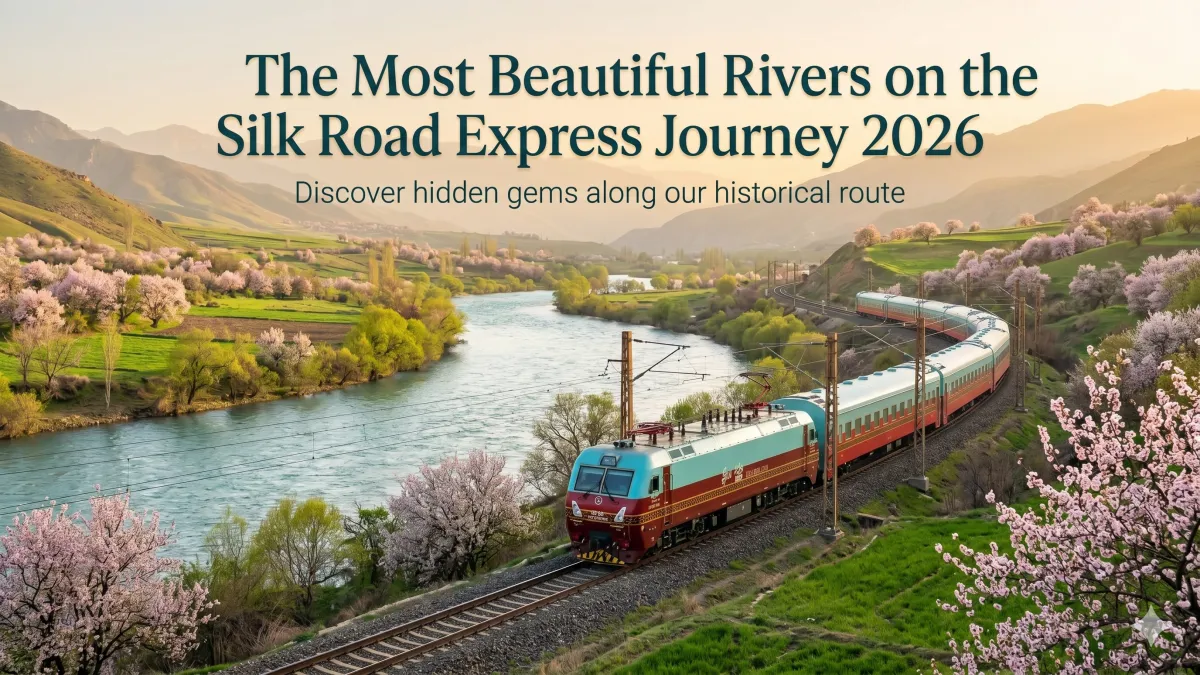
Train travel is especially rewarding in autumn, when the changing light makes the landscape feel like part of the journey rather than something seen only at the destination. Instead of rushing from one airport to the next, a rail journey lets the season unfold gradually — forests giving way to fields, fields to mountains, and mountains to distant desert horizons. There's a reason scenic rail routes see a noticeable bump in interest every fall: watching a season change through a train window is one of travel's simplest pleasures.
The Silk Road Express's Southern Silk Road route turns this into reality — crossing from the Tibetan Plateau to the desert in seven days.
6. Visit Cities After the Summer Crowds
Cities that feel overwhelming in July often become genuinely pleasant by late September. Rome, Paris, and Istanbul all shift into a calmer rhythm once summer tourists head home, and historic cities along the old Silk Road — Xi'an, Dunhuang, Kashi(Kashgar) — are easier to explore without midday heat or peak-season lines. Museums are less crowded, restaurant reservations get easier, and outdoor cafés become comfortable again.
7. Travel for Seasonal Food
Beyond wine country, autumn brings its own food calendar almost everywhere: mushroom season in parts of Europe and Asia, tea harvests, dried fruit and nut season in Central Asia, and the kind of hearty, warming dishes that only make sense once the weather cools. Planning a trip loosely around a region's food season is one of the easiest ways to add depth to a fall itinerary.
8. Go Somewhere That's Too Hot in Summer
Some of the most rewarding fall destinations are places you'd never consider visiting in July or August. Deserts, high plateaus, and dry inland regions that are punishing in summer heat become genuinely comfortable once autumn sets in — often with the added bonus of dramatically clearer skies and better visibility for photography.
A Different First Day of Fall: Autumn on the Silk Road
In the United States, fall often means maple trees, pumpkin patches, and apple cider. Along the old Silk Road in western China, autumn shows up in a completely different palette: desert gold, deep blue skies, snow-white peaks, and the warm clay tones of ancient oasis towns.
Traveling west from Xining toward Kashi(Kashgar) in autumn means moving through high-plateau grasslands, past mountain ranges still capped in early snow, and into desert corridors where the poplar trees have turned. Old Silk Road cities feel especially atmospheric this time of year — markets fill with dried fruit and fresh melons, the midday heat has faded, and the light in the late afternoon turns everything a warm amber.
It's autumn without a single maple leaf in sight — but it's no less dramatic.
A Slower Way to See Autumn
For travelers looking beyond the familiar fall foliage routes, the Silk Road Express's Southern Silk Road Autumn Luxury Train Tour 7D6N follows exactly this kind of landscape shift — one that unfolds not through a checklist of stops, but through a slow procession of climate, color, and terrain.
The journey begins on the eastern edge of the Tibetan Plateau, at a 600-year-old monastery whose Ming-dynasty murals still hold their original color. From there, the train runs west into Hami, where a fleet of off-road vehicles carries travelers across the wind-carved yardang formations of the Great Sea Road(大海道) — a landscape so eroded and alien it feels closer to another planet than anywhere in China. Then comes Tarim, home to the largest surviving stand of desert poplar on Earth: more than 40,000 hectares of ancient trees that turn a fierce, flickering gold each October, set against permanent snowpack in the distance. The journey ends in Kashi(Kashgar), where the old city's mud-brick lanes, copper workshops, and the call to prayer from the Id Kah Mosque still retain their centuries-old character.
What makes this route worth mentioning isn't any single stop — it's the sequence. Tibetan Buddhist architecture gives way to Mars-like desert, which gives way to a forest that looks like it's on fire, which gives way to one of the last living Silk Road cities. Watched from a train window, autumn here isn't a single color. It's a series of them, one landscape at a time.
Frequently Asked Questions
When is the first day of fall in 2026?
The first day of fall, marked by the autumnal equinox, falls on September 22, 2026, in the United States, at 8:05 p.m. EDT. The exact date and time can shift slightly depending on your time zone.
What is the autumnal equinox?
The autumnal equinox is the astronomical moment when the sun crosses the celestial equator, bringing day and night close to equal length and marking the official beginning of astronomical fall in the Northern Hemisphere.
Where are the best places to travel after the autumnal equinox?
Popular options include classic foliage regions like New England and Japan, mountain destinations such as the Alps and Rockies, harvest regions like Tuscany and Napa Valley, and scenic rail journeys. For a less familiar alternative, western China offers golden poplar forests, historic Silk Road cities, and high-desert landscapes in autumn.
Is late September a good time to visit Xinjiang?
Late September typically marks the beginning of Xinjiang's golden poplar season, with color often continuing into October. Exact timing depends on location and that year's weather conditions, so it's worth checking current conditions closer to your travel dates.
Is fall a good time to travel in general?
Yes. Fall combines cooler, more comfortable weather with fewer crowds, softer natural light, and harvest-season food — making it one of the most practical and rewarding seasons to travel almost anywhere in the Northern Hemisphere.
Is there a luxury train that runs along the Silk Road in autumn?
Yes, the Silk Road Express operates a seasonal autumn route from Xining to Kashgar, timed to coincide with Xinjiang's golden poplar season. The journey includes stops at historic Silk Road cities, desert landscapes, and poplar forests, with peak season typically from late September through mid-October.
How do I book the Silk Road Express autumn tour?
The Silk Road Express autumn departure runs for a limited season. Southern Silk Road Autumn Luxury Train Tour 7D6N for itinerary details, cabin options, and 26&27 departure dates.