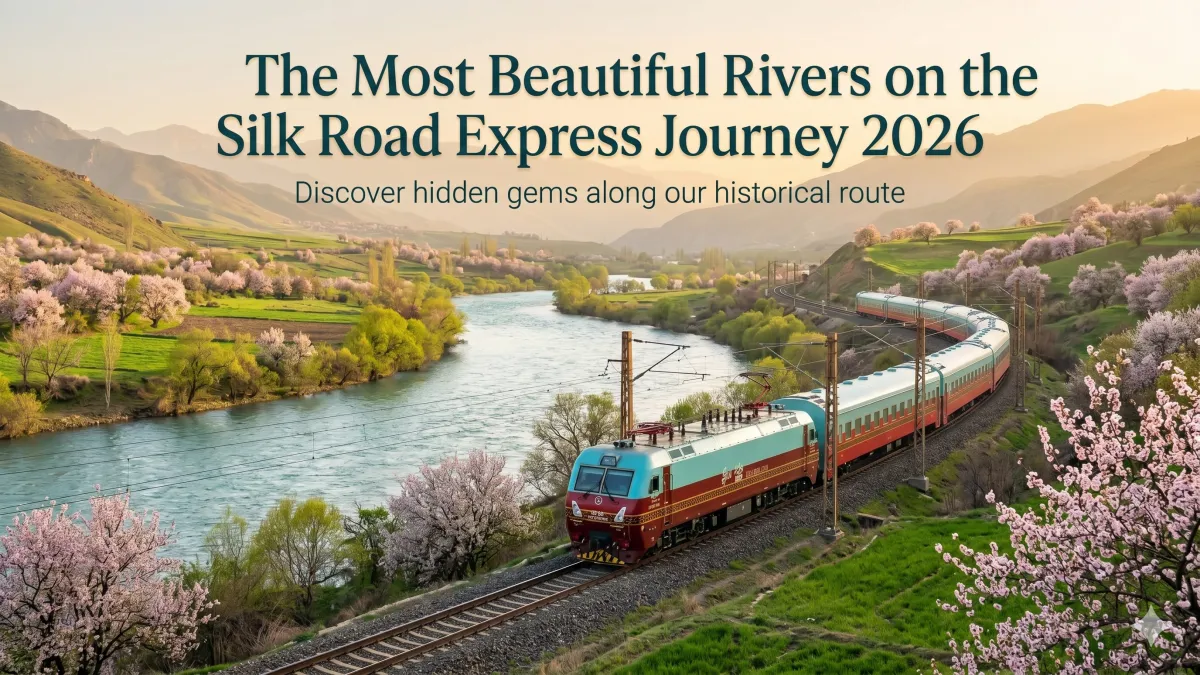
Xishuangbanna Travel Guide: China's Tropical Rainforest Explained
Xishuangbanna sits at the southern tip of Yunnan Province, bordering Laos and Myanmar. It holds China's largest and best-preserved tropical rainforest. Until 1974, scientists had no formal record of tropical rainforest existing in China at all.
A research team found a cluster of ancient sky trees here and changed the scientific record entirely. This guide covers what Xishuangbanna is, what to see, and when to go. It also explains how the Silk Road Express brings you here.
What Is Xishuangbanna?
Xishuangbanna Dai Autonomous Prefecture covers roughly 19,000 square kilometers at the southernmost edge of Yunnan. It borders Laos to the east and Myanmar to the west. The Lancang River runs through the region from north to south. It becomes the Mekong after crossing into Laos.
In the Dai language, Xishuangbanna means "an ideal and magical paradise." The Dai people named it. They remain the largest ethnic group in the prefecture today. The total resident population is approximately 1.333 million. Of those, 790,300 belong to various ethnic minorities. The Dai make up 34 percent of the total.
Thirteen ethnic minorities live here in total. The Dai, Hani, Blang, and Jino are the most significant in terms of population and cultural presence. Each has its own language, architecture, food traditions, and festival calendar.
The region sits entirely below the Tropic of Cancer. There are only two seasons: dry and wet. The wet season runs from May to October. The dry season runs from November to April. Those seven dry months matter enormously for when to visit and what you can do.
The Rainforest: What Makes It Significant
China has only two tropical rainforests. Xishuangbanna holds the larger and more biologically significant one. The other is on the island of Hainan.
The Xishuangbanna Biosphere Reserve is the largest and most comprehensive tropical forest in China. UNESCO admitted it to the Biosphere Reserve Network in 1993. The reserve spans five geographically separate sub-reserves across Jinghong, Mengla, and Menghai: Mengyang, Menglun, Mengla, Shangyong, and Man'gao. Together they cover 242,500 hectares.
The biodiversity numbers are exceptional. The rainforest holds 2,772 species of vascular plants. That represents 16 percent of China's total plant diversity. Its bird species represent 36 percent of China's total. Its mammals account for 21 percent.
Among the large tree species is the Parashorea chinensis, called the sky tree locally. It grows 50 to 60 meters tall and can exceed 80 meters. Its seeds carry wings to help them land safely after falling from that height.
In 1974, botanist Cai Xitao led a team to a forest ravine here. They found the first confirmed cluster of sky trees in China. Before that discovery, the international academic community had no scientific record of tropical rainforest existing in China.
More than 90 percent of China's wild Asian elephants live here. The prefecture holds the largest population of the Asian elephant in the country. Wild herds roam the northern valleys. Morning visits to those areas are most reliable for sightings.
Dry Season vs Wet Season: Why Timing Changes Everything
Most travel guides say Xishuangbanna is good year-round. That is not the full picture.
The wet season runs May to October. Trails turn muddy. Leeches appear on forest paths. Insects peak. River levels rise. Visibility drops in the forest understory. Some trekking routes close entirely.
The dry season runs November to April. Forest trails are firm. Insects reduce. Air clears. The Lancang River runs transparent. Wildlife concentrates near water sources, which makes sightings far more reliable. The elephant herds move into valleys.
December and January are the coolest months. Temperatures in Jinghong average around 19 degrees Celsius. This is the window the Silk Road Express uses for its Xishuangbanna stop. It is the right window. The local ethnic minority guide-led jungle trek works best on dry, firm ground. Yunnan in winter is consistently underrated by travelers who assume cold and assume wrong.
The Water-Splashing Festival falls in mid-April. This is technically still dry season, but crowds spike and accommodation prices rise. Book early for the festival, or plan November through March for quiet conditions.
Period | Trail Condition | Wildlife Activity | Crowds | Best For |
Nov to Feb | Firm, dry | High near water | Low | Jungle trekking, wildlife |
March to April | Drying | Moderate | Building | Balanced conditions |
May to Oct | Muddy, wet | Dispersed | Moderate | Botanical garden visits |
Mid-April | Best of dry | Good | Very high | Water-Splashing Festival |
What to See in Xishuangbanna
The Primary Rainforest. This is the experience most travel guides understate. The managed attractions are interesting. The primary rainforest is different. Board roots rise two meters from the ground. Ancient tree ferns fill the understory. Strangler figs climb century-old trunks. The canopy blocks most direct light. Access requires a guide. The sounds inside the forest differ from anything outside it.
Xishuangbanna Tropical Botanical Garden. Founded in 1959, it is the largest botanical garden in China. It holds about 13,000 plant species. It is the only place in China where the rare Sapria himalayana flower has ever been photographed. The western section holds the most concentrated attractions. Allow half a day minimum.
Wild Elephant Valley. A national nature reserve north of Jinghong where wild Asian elephants roam. Viewing platforms allow observation without disturbing the herds. Morning visits produce the most reliable sightings.
Dai Minority Park. Five traditional Dai villages preserved within a 336-hectare site. The park covers Dai architecture, customs, and a daily performance of the Water-Splashing Festival. It is the most organized cultural introduction to Dai life in the region.
Jinghong City Markets. The night market along Manting Road serves residents, not tourists. Dai food runs sour and fragrant. Lemongrass grilled fish, sour bamboo shoot soup, pineapple rice, and Dai-style barbecue are the staples.
The Dai Ethnic Culture
The Dai people have practiced Theravada Buddhism for over a thousand years. Their calendar started in 638 AD and underpins their entire festival cycle. Dai historical documents include poetry, legends, stories, fables, and children's tales. The calendar also tracks solar and lunar eclipses.
The Water-Splashing Festival is the most visible cultural event. It falls in mid-April and lasts three days. Dai people wear brightly colored costumes. They splash water on each other to ring out the old year and welcome the new. Water is a symbol of sanctity and brightness in Dai culture. Dragon boat races run on the Lancang River. Buddhist temples host the "Bathing the Buddha" ritual before the public celebration begins.
Outside the festival, Dai village life is quiet. Stilted wooden houses stand above the ground to manage humidity and pests. Communal rice fields surround most villages. Buddhist temple compounds appear in every settlement. Monks are a constant presence.
How the Silk Road Express Reaches Xishuangbanna
Three Silk Road Express Yunnan itineraries include a Xishuangbanna stop. One departs from Chengdu. Two depart from Kunming. All three include the same primary rainforest experience.
A private vehicle transfers travelers approximately one hour from the railway station into the primary forest reserve.
A local ethnic minority guide leads the trek. The route covers stream crossings, forest boardwalks, and close study of the forest understory. There are no crowds at this access point. There is no ticket queue. This access is not available to walk-in tourists independently.
Standard tours deliver the botanical garden and the elephant valley. The Silk Road Express delivers the primary forest with a guide whose community has lived inside this forest for generations.
That difference is not one of comfort. It is one of access that money cannot simply buy at a ticket window.
Practical Information
Getting there. Jinghong is the main city. The train journey from Kunming to Jinghong takes approximately 3 to 4 hours. Jinghong station receives more than 20 trains per day from Kunming. Flights are available from major Chinese cities via Xishuangbanna Gasa International Airport.
Getting around. Twelve direct bus routes connect Jinghong to major attractions. Taxis and rental scooters are available in the city. Scooters work well for reaching smaller villages off the main bus routes.
Health notes. Apply insect repellent before any forest walking, even in the dry season. Check carefully for leeches after wet-season treks. Do not drink stream or river water untreated.
Language. Dai is spoken throughout the region. Mandarin is understood in Jinghong and tourist areas. English is limited outside hotels. A guide who speaks English is worth the additional cost.China travel entry requirements and visa rules apply to international visitors.
Conclusion
Xishuangbanna is not what most travel guides describe. The standard circuit covers gardens and elephant platforms. The actual place is a 242,500-hectare UNESCO Biosphere Reserve. It holds 90 percent of China's wild elephants. Its birds account for 36 percent of national diversity. Scientists did not formally document its primary forest until 50 years ago.
Go in the dry season. Skip the crowds. Get a guide who knows the forest. The Silk Road Express connects Yunnan's tropical south to the rest of China. It takes you into the trees rather than around them.
FAQs
What is Xishuangbanna known for?
Xishuangbanna is China's largest tropical rainforest, home to over 90 percent of China's wild Asian elephants. It borders Laos and Myanmar. Scientists did not formally document its tropical rainforest until 1974. It is also known for Dai ethnic culture and the Water-Splashing Festival in mid-April.
What is the best time to visit Xishuangbanna?
The dry season from November to April is the best window for jungle trekking and wildlife watching. Trails are firm, insects are fewer, and wildlife concentrates near water sources. Mid-April brings the Water-Splashing Festival but also heavy crowds. December through February offers the quietest conditions with the most reliable wildlife activity.
How do I get to Xishuangbanna from Kunming?
By train from Kunming to Jinghong, the journey takes approximately 3 to 4 hours. More than 20 trains run this route daily. Flights are also available but the train is more frequent and often more convenient.
Why is Xishuangbanna ecologically significant?
Xishuangbanna holds China's largest and most biodiverse tropical rainforest, protected as a UNESCO Biosphere Reserve since 1993. Its five sub-reserves span 242,500 hectares and host 2,772 species of vascular plants, accounting for 16 percent of China's total plant diversity. According to research from the Asian Elephant Specialist Group, more than 90 percent of China's wild Asian elephants live within its three core zones — Mengyang, Mengla, and Shangyong. The region's ecological importance was cemented in 1974, when a research team led by botanist Cai Xitao discovered a cluster of sky trees here, providing the first scientific proof that tropical rainforest existed in China at all.
How does the Silk Road Express visit differ from a standard tour?
Standard tours go to the botanical garden and elephant valley, both accessible independently. The Silk Road Express provides access to primary rainforest with a Dai guide
. That access point is not available to walk-in visitors. It is the difference between seeing a managed conservation site and entering the forest itself.
Is Xishuangbanna suitable for solo travel?
Yes. Jinghong and major sites are safe and accessible. Remote village trekking is better with a guide. The Silk Road Express handles all logistics for the primary forest trek. Independent travelers should hire a local guide for anything beyond the main tourist circuit.