7 Yunnan China Experiences You Can Only Reach by Train
Most Yunnan, China guides repeat the same four stops: Kunming, Dali, Lijiang, and Shangri-La. None of them mentions a country border crossed by rail,or a narrow-gauge train that still runs daily along the shores of Yilong Lake. You also won't find a French long-table dinner served on a century-old station platform—because this is an exclusive privilege crafted solely for Silk Road Express guests. These seven experiences exist because the Silk Road Express connects them by train. A car or a flight cannot reach them the same way.
Major guides covering Yunnan, China, focus on Kunming, Dali, Lijiang, and Shangri-La. None of the standard guides describes a vintage railway museum or a long-table dinner on a train platform. None mentions a land crossing into Vietnam. These seven stops fill that gap.
7 Top Spots on Silk Road Journey
Silk Road Express takes you to the most beautiful sites across Yunnan, China.
Ride the Century-Old Gebishi Railway Into Shiping
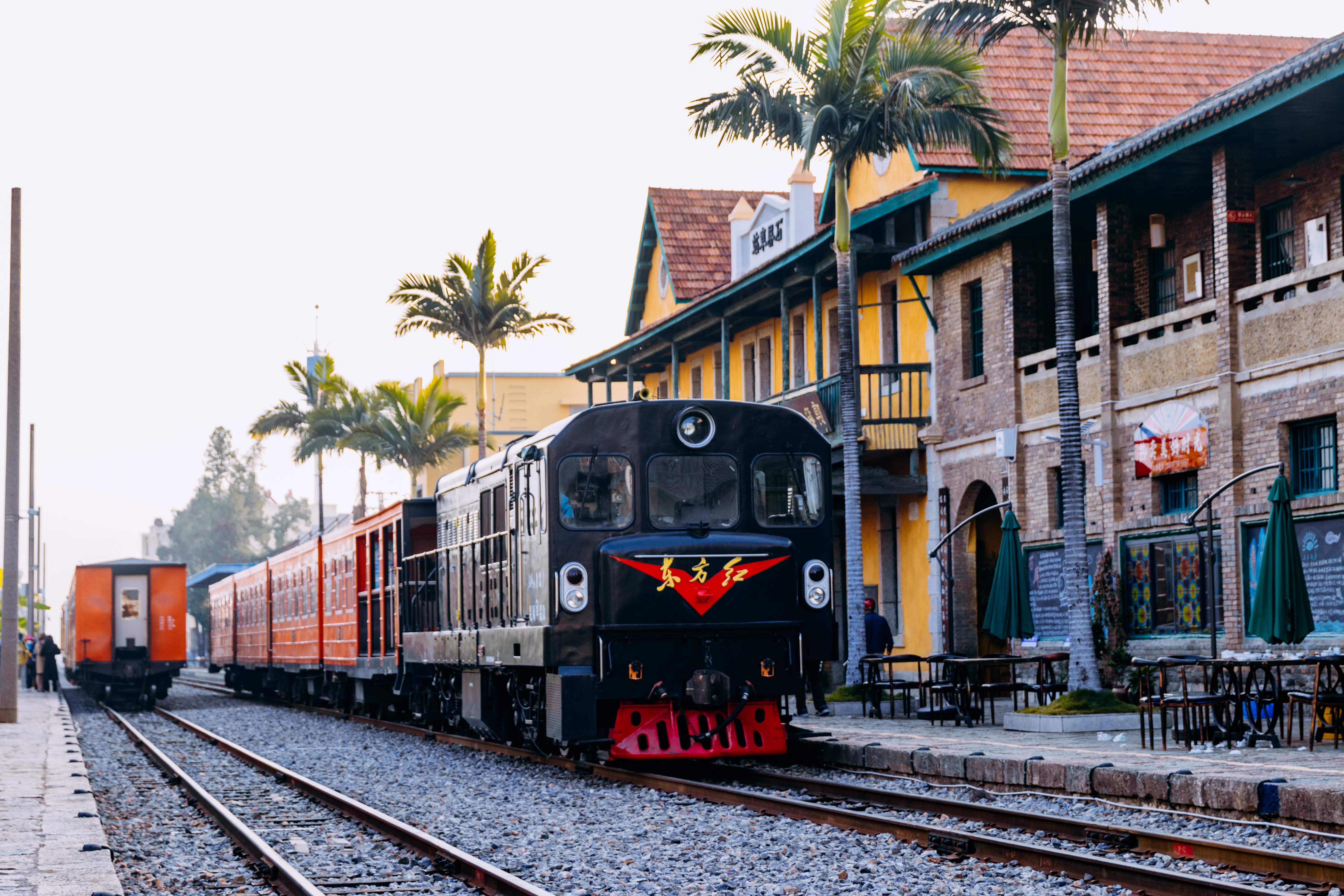
The Gebishi Railway is a narrow-gauge line built in the early 1900s. It is one of the last of its kind still running in China. The Silk Road Express links onto it for a short ride aboard the vintage Yi Long Hao train. The route crosses Yilong Lake on a path built for an older era of travel. No flight or highway covers this exact stretch of track.
Step Into Yunnan, China's Shiping Railway Museum
Inside the museum sit faded share certificates, handwritten tickets, and rusted parts from the original Gebishi line. A full-scale replica of the Baldwin SN locomotive stands at the center of the hall. Local staff lead the visit, not a recorded tour, and they explain pieces that most guidebooks skip entirely. It is one of the few places in Yunnan, China, that houses the entire history of a railway under one roof.
Eat a French Long-Table Dinner on a Century-Old Platform
At the old Shiping station, the train's chef sets a long table right on the platform. The menu favors Yunnan's mountain vegetables, mushrooms, and fruit, cooked with French technique. Afternoon light turns the old station gold while the meal runs late into the evening. The setting alone makes this dinner impossible to copy anywhere else on the route. Booking ahead matters, since the table seats only a small group at a time.
Trek the Xishuangbanna Rainforest With a Local Guide
A short drive from the train brings travelers into Xishuangbanna's rainforest. This tropical pocket of Yunnan borders Myanmar and Laos. A local guide leads the walk past board roots, tangled vines, and centuries-old tree ferns. The dry season keeps the trails firm and the mosquitoes low. Few travel guides send visitors this deep into the jungle on foot.
Learn Bai Heritage Crafts in Xizhou, Dali
Xizhou is a Bai ethnic town near Dali, built around centuries-old courtyard houses. Inside a small heritage center, craftspeople still carve woodblock prints and hand-make paper. They also shape the region's tile-cat pottery. Visitors try each craft themselves, guided by the people who still practice it daily. This level of hands-on access rarely makes it into a standard Yunnan itinerary.
Sit for Tea in the Mountains Above Dali
Cangshan rises directly behind Dali, with nineteen peaks and eighteen mountain streams running down its slopes. A small tea room sits tucked into the hillside, reached only after the walk up. Guests sit quietly with local tea while the mountain air cools the afternoon. There is no rush here, and no crowd either. Most visitors to Dali never make it up here, since the old town keeps people at lake level.
Cross Into Vietnam by Land and Chase the Clouds Over Sapa
The route ends at Hekou, the border town where China meets Vietnam by land. From there, travelers cross into the Sapa region near Fansipan Peak, the highest point in Vietnam. On clear mornings, cloud seas settle below the summit, and in December, cherry blossoms bloom along the hillsides. No direct flights connect these two countries. No road trip pairs a Chinese rainforest with a Vietnamese mountain town in one continuous journey.
How to Reach These Stops on the Silk Road Express
These seven experiences come from three separate train routes of Silk Road Express Luxury Routes-Train Of Glamour, not one. What matters most is not the schedule. It is the station where each route actually stops. That station determines how close you get to each experience, without a long transfer afterward.
Shiping Railway, Museum, and Dinner: Book the Dian Nan Impression route. Its train stops directly at Shiping's century-old station. That is the same platform where the museum sits, and the long-table dinner is served. There is no separate transfer between the train and these three experiences.
Xizhou Crafts and Cangshan Tea: Book the Cangwer Tea Talk route. The train stops near Dali. A vehicle included in the package carries travelers into Xizhou town and up the lower slopes of Cangshan. The walk to the tea room begins where the vehicle parks.
The Hekou Crossing and Sapa Cloud Seas: The Dian-Yue Trace route's train stops at Hekou itself, the border town where China meets Vietnam. The crossing point sits within a short drive of the station, not a separate city trip.
The Xishuangbanna Rainforest Trek: All three routes stop near Jinghong, the gateway to Xishuangbanna. From there, a roughly one-hour drive included in the itinerary reaches the rainforest reserve itself.
Boarding rules stay the same no matter which route you pick:
● Arrive at the departure station at least 40 minutes early.
● Carry a valid government ID to enter the platform.
● Each route runs as one continuous itinerary, with no separate tickets needed between stops.
Best Time to Visit Yunnan, China
Winter still wins for this specific route. From November through February, Xishuangbanna's trails stay dry. The cherry blossoms and cloud seas near Sapa only appear during these months.
Spring (March to May): Kunming and Dali turn into the region's most photogenic stretch. Kunming's own cherry blossoms, Dali's jacaranda trees, and the Luoping rapeseed fields all bloom at once. These are separate from the winter blossoms near Sapa. The trade-off shows up in Xishuangbanna, where temperatures climb fast before the rains start. The mid-April Water-Splashing Festival adds heavy crowds on top of that.
Summer (June to August): This is the one season to avoid for this route. Xishuangbanna's wet season delivers most of its yearly rainfall during these months, turning rainforest trails to mud. Kunming stays mild, but frequent rain limits the appeal of the rest of the trip.
Autumn (September to November): A strong second choice. The rains ease, skies clear, and Kunming and Dali settle into comfortable, dry days. The route's signature winter moment is the one thing missing here. Cherry blossoms and cloud seas near Sapa do not begin until December.
Things to Do and Not to Do on the Route
These notes are based on the operator's own travel advisories.
DO
● Carry a valid passport or ID for every boarding, including the Hekou-Sapa border crossing.
● Confirm Vietnam visa requirements before booking the Dian-Yue Trace route.
● Arrive at the station at least 40 minutes before departure.
● Follow the tourism ambassador's guidance between stops, since drive times can run long.
Don't:
● Let children run between carriages or near the connecting doors.
● Plug in kettles, hair tools, or other high-power devices in the cabin, since onboard voltage is limited.
● Buy souvenirs at any shop the operator has not vetted. The Silk Road Express does not partner with shopping venues and cannot help with after-sales issues.
● Wander off during stops without checking the return time first.
Conclusion
These seven stops cover ground most Yunnan trips miss. A century-old railway, a platform dinner, and Bai crafts make the list. Mountain tea, rainforest trails, and a Vietnam crossing also make it. The Sapa crossing is hardest to copy by car or plane. The Shiping railway comes close too. Start a Yunnan China trip here, not just Dali and Lijiang.
FAQs
What is the Silk Road Express?
The Silk Road Express is a luxury train operator running multi-day routes across China. One of its routes through Yunnan, China, links rainforest, ancient towns, and a land border crossing into Vietnam. All of it is reached by train, not separate flights or transfers.
Can I visit the Shiping Railway Museum without taking the full train route?
Shiping is reachable independently by road or local train from Kunming. The museum and the old station are open to visitors outside the Silk Road Express itinerary. The vintage Yi Long Hao train ride and the platform dinner are specific to the route.
Do I need a visa to cross from Yunnan into Vietnam at Hekou?
Most nationalities need a valid Vietnam visa to cross at Hekou, and rules vary by passport. Check Vietnam's current visa policy before booking. Confirm exact requirements with the route operator or embassy.
Which of these experiences is most weather-dependent?
The cloud-sea views near Sapa and the cherry blossoms near Fansipan Peak both depend on winter timing. That window runs roughly from November through February. The rainforest trek is best in the dry season, too. The railway museum, the platform dinner, and the Dali crafts run year-round.